Somatotropin
Somatotropin: What is somatropin?
Generally speaking, human growth hormone (HGH) is called somatropin / somatotropin – a peptide structure produced by the endocrine gland. Somatotropin is a polypeptide containing 191 amino acids. The main job of somatotropin is to build muscle mass and help your body work normally. It stimulates the liver and other tissues to produce insulin-like growth factor 1 (IGF-1). IGF-1, in turn, stimulates bone growth and also plays a key role in muscle growth.
Somatotropin plays an important role in cholesterol metabolism. Low growth hormone levels lead to atherosclerosis, stroke, heart attack and other cardiovascular diseases. It is believed that people with sufficient growth hormone levels are more resistant to stress.
This hormone causes sharp linear growth in young people (due to the rapid growth of the tubular bones of the limbs). Excessive or insufficient secretion of somatotropin in childhood leads to gigantism and dwarfism. In adults, somatotropin deficiency causes acromegaly – an endocrine disease accompanied by thickening of the hands, feet, skull (especially the facial part) and other very unpleasant symptoms (headache, fatigue, visual impairment, mental retardation).

Synthetic somatropin can be used in sports to reduce muscle cell destruction and body fat. Somatotropin stimulates protein synthesis and promotes lipolysis. It also accelerates the transport of glucose and promotes the accumulation of glycogen.
The basal concentrations of somatotropin in the body are low – 1-5 ng / ml. These values can be increased during peak periods (up to 45 ng / ml).
Somatotropin stimulates muscle growth. In addition, it also helps:
- Normalize metabolic processes;
- Improving fat burning processes;
- Stop the destruction of muscle tissue;
- Strengthen joints and ligaments;
- Increase glycogen levels in liver cells;
- Increase the number and size of liver cells and thymus.
- Improve collagen synthesis;
- Restore damaged tissue and heal wounds.
- Increase sexual activity;
- Improve blood lipid profiles.
However, do not forget that somatotropin works in conjunction with other hormones produced in liver cells.
It is also important to know that the greatest amount of growth hormone in the body is present in people up to 20 years old. After that, the amount will decrease by 15% over the next 10 years. Of course, the amount of somatotropin in the body varies depending on different time intervals (during a person’s life).
The process of HGH secretion occurs regularly throughout the day. In particular, there are spikes when the process reaches its maximum value (every 4-5 hours). The highest levels of growth hormone are produced at night (one hour after falling asleep).
This is how somatropin is produced: The pituitary gland receives a signal from the hypothalamus and begins to produce somatotropin. The hormone then enters the blood and reaches the liver. Further, in the liver cells, the growth hormone is converted into another substance called somatomedin (this substance enters the muscle cells throughout the body).

Clinical applications of somatropin
Somatotropin is often used in medicine to treat developmental and growth disorders in children. Such treatment should be carried out as soon as possible: the main course should be completed before reaching puberty. HGH is currently one of the best options for treating pituitary dwarfism.
Somatotropin is often used to treat nerve disorders. Therefore, it can be used in the treatment of depression under medical supervision.
In sports, somatotropin is most commonly used in bodybuilding. It has a good anabolic effect and helps reduce body fat percentage in athletes. Somatotropin accelerates lipolysis and thus promotes active fat burning. In addition, somatotropin has the following effects: it slows down age-related processes and strengthens bone tissue.
Somatropin deficiency
The functions of the endocrine system are not yet fully understood. However, if the excess of HGH contributes to the growth of all tissues, a deficiency of somatropin, on the contrary, slows down the growth of cells. For example, if a child or adolescent does not have enough growth hormone in their blood, it means that they suffer from certain growth disorders (dwarfism). In an adult, the lack of somatropin leads to early aging. Just as with acromegaly, your internal organs also suffer in addition to aesthetic disorders. Here are some signs of somatropin deficiency:
- Muscle mass loss. As a rule, the lack of HGH promotes the production of estrogens – female hormones that cause fat accumulation.
- Increase in adipose tissue mass as a result of reduction in muscle mass.
- Depression and other psychological problems due to the increase in estrogen.
- Impaired cardiac function. It is known that HGH is an anabolic hormone. Nevertheless, our heart will not function properly without sufficient amounts of somatropin.
- Bone fragility. A high risk of bone fractures in older people is associated with somatropin deficiency.

Somatotropin anti-aging effects
Human growth hormone can help rejuvenate your body. Growth-promoting factors predominate in our body for up to 30 years. Afterwards, and especially in old age, the restorative processes are extremely weak and the destructive processes are very strong. Therefore, somatropin can have a positive effect.
Experts emphasize that small prophylactic doses of growth hormone are used to increase levels and extend lifespan. It is useful for those who are 30-40 years old. However, it is worth using under medical supervision.
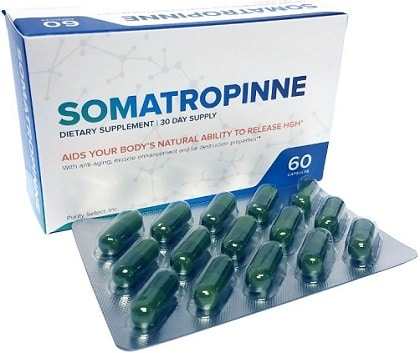
However, due to the high cost of injections, people continue to look for cheaper ways to increase growth hormone in the body. At the moment there are several options. First, try using amino acids, arginine, ornithine, glutamine, zinc and some other preparations. These supplements have been proven to increase growth hormone levels by 30% or more.
High somatotropin levels have a beneficial effect on the cardiovascular system. According to statistics, people with low levels of growth hormone die more often from cardiovascular diseases. Low levels are often the main cause of an increased risk of stroke. Other clinical studies showed that patients who used growth hormones managed to lose weight, increase muscle mass, improve libido and immune function.
Recent studies show that HGH decline is neither irreplaceable nor permanent. Some experiments clearly show that low secretion of growth hormone is reversible by artificially synthesized drugs.

Somatotropin
How to increase your somatotropin levels
Let’s take a closer look at the natural ways to increase growth hormone levels in the body. Let’s start with the factors affecting somatotropin synthesis:
- Stressful situations (including periodic stress);
- High cortisol levels in the blood;
- Overstimulation of the central nervous system;
- Improper diet containing carbohydrates.
On the other hand, these are the stimulating factors for the production of somatotropin:
- Physical activity;
- Dietary supplements. You must consume amino acids (glutamine, arginine, ornithine) together with natural products (pumpkin seeds, pine nuts, hard cheese, soy, boiled eggs).
- Quality sleep and rest. About 80% of the total amount of growth hormone is produced during sleep. Therefore, it is especially useful to sleep 7-8 hours a day. It’s even better if you take a 20 to 30 minute nap during the day.
- Proper nutrition. Don’t forget the basic principles of a healthy diet. Use slower proteins that are easy to digest (egg whites or low-fat cottage cheese).
These simple rules will definitely help you increase the amount of growth hormone. Remember: Somatotropin is a very powerful component that affects the growth and development of your body systems. And most importantly, don’t forget that there are many natural ways to increase somatotropin levels in the blood.
Individual Evidence
- https://onlinelibrary.wiley.com/doi/abs/10.1002/elps.200800221
- https://www.ncbi.nlm.nih.gov/pmc/articles/PMC2904392/
- https://www.ncbi.nlm.nih.gov/pmc/articles/PMC297368/
- https://onlinelibrary.wiley.com/doi/full/10.1111/j.1365-2265.2006.02676.x
- https://journals.physiology.org/doi/abs/10.1152/ajplegacy.1975.229.2.409